下半身是身體非常重要但常被忽略的部位。如果腿部力量不足,往往會引發許多問題,例如背痛、膝蓋痛。今天我將向你展示並指導你如何安全地完成你的第一次深蹲。
Lower body is the very important but often neglected part of body. This often brings to lots of issues if legs are weak, like back pain, knee pain. Today I am going to show and guide you how you can perform your first squat safely.
1. 準備/熱身動作 | Preparation/Warm-up
- 打開髖關節,雙腳與肩同寬,腳尖略向外,以自身體重下蹲。請嘗試透過進行 10 次自重深蹲來熱身,以熱身關節和肌肉。
Open you hips joints, foot stance shoulder width, feet slightly pointing outward, to squat in bodyweight. Perform 10 repetitions of bodyweight squat to warm up to joints and muscles.
如果你無法蹲到夠低,使股骨與地面保持水平,可以嘗試握住槓鈴片或其他有重量的物體來幫助踝關節背屈。您也可以在膝蓋上放一個壺鈴,以幫助您進行熱身深蹲。
If you can’t squat low enough so that your femurs are horizontal to the ground, try holding a barbell plate or something with weight to help your ankle dorsiflexion. You can also put on a kettlebell on your knee to help when you do warm-up squat.
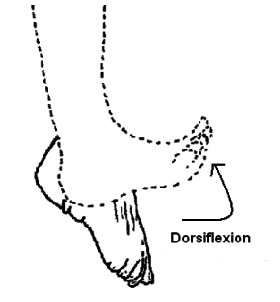
Figure 1: Ankle dorsiflexion
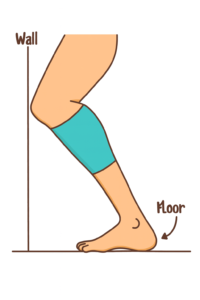
Figure 2: Knee to wall
- 在膝向牆測試中,你的膝蓋不應離開地面,而且還要緊貼牆面。測試合格的標準是:腳尖到牆的距離至少為10公分。
In a knee to wall test, your angle should not lift off the ground, your knee should touch the wall. To pass the test, the distance from your tip of your foot to the wall should be at least 10 cm.
2. 步驟 | Step-by-step
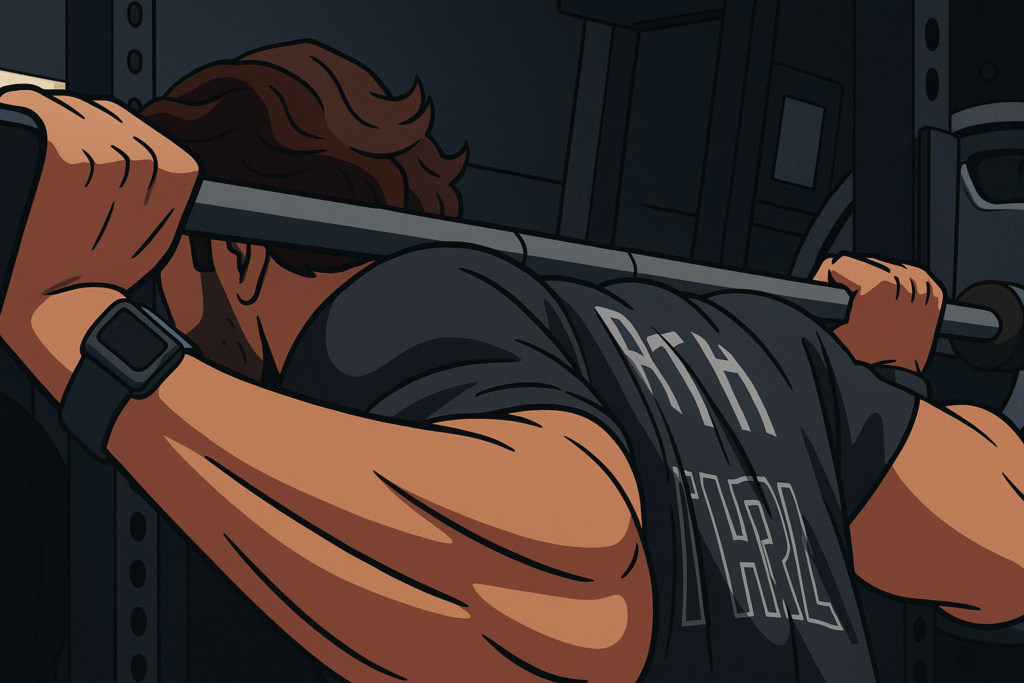
Figure 3: Set the height of the bar in the squat rack
- 槓鈴的高度應在斜方肌或肩胛骨中部,雙腿稍微彎曲,這樣當你站直時槓鈴就會上升。
The height of the bar should be around the trapezius or middle of your scapula, and the legs should be slightly bent, so that the bar will go up when you stand straight.
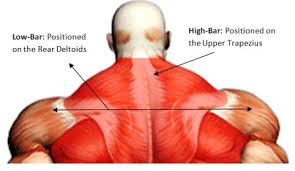
Figure 4: High bar vs low bar
- 設定深蹲架上安全桿的高度。
Set the height of the safety bar on the squat rack.
- 安全桿的高度應該略低於你蹲到最低點時桿的高度。
The height of the safety bar should be just below the height of the bar when you squat to your lowest.
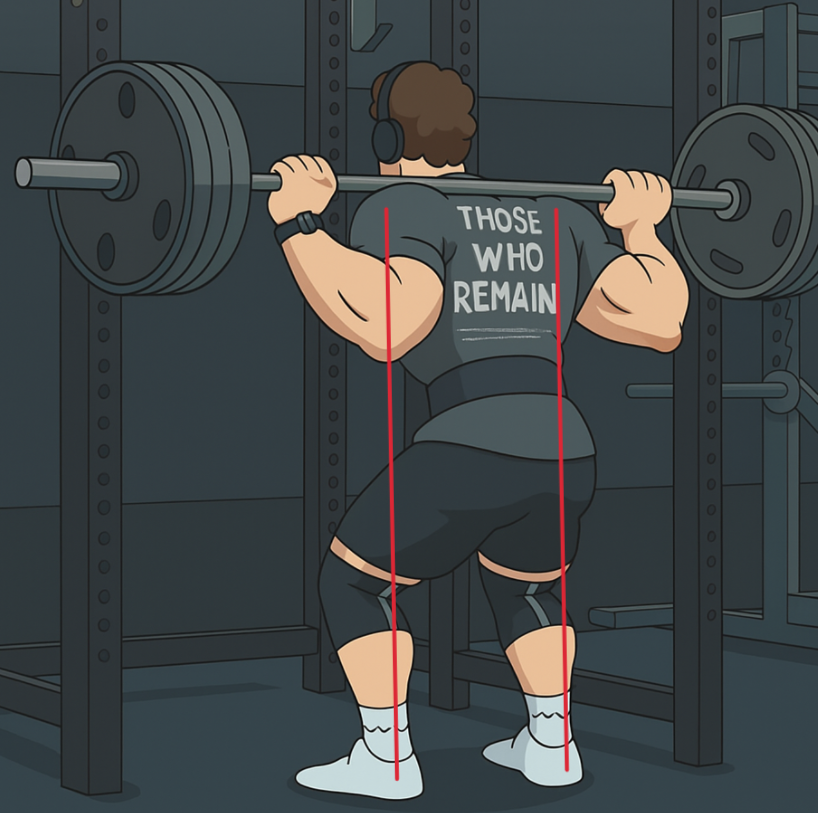
Figure 5: Foot stance shoulder width and feet slightly point outwards
- 這是為了讓你的膝蓋在蹲下時更舒服。
This is to make your knee more comfortable when you squat.
- 僅後退 1-2 步以保存體力。這取決於個人喜好。
Walk back 1-2 step only to preserve energy. This is up to personal preference.
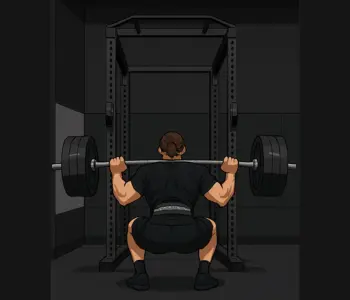
- 屏住呼吸,膝蓋向外,打開髖關節蹲下。屏住呼吸是為了保護你的核心。就像你無法壓碎一瓶未開封的可口可樂一樣。膝蓋向外,打開髖關節是為了更容易蹲下。另外,將重心置於中足上找到平衡。
Hold breath, push out your knees and open your hips to squat. Hold your breath is to protect your core. It is like you can’t crush an unopened Coca-Cola. Push out your knees and open your hips joints is to squat lower easier. Besides, Find your balance by placing your center of gravity over your mid-foot.
- 下蹲時,挺胸,挺直下背部。保持下背部挺直, 是為了保護下背部。不要過度伸展或彎曲。槓鈴到足中部的連線應始終與地面垂直。
When squatting, keep your chest up and lower back straight. Keep you lower back straight is to protect your lower back. Do not over extend or flex. The line of the bar to the mid-foot should be perpendicular to the ground at all time.
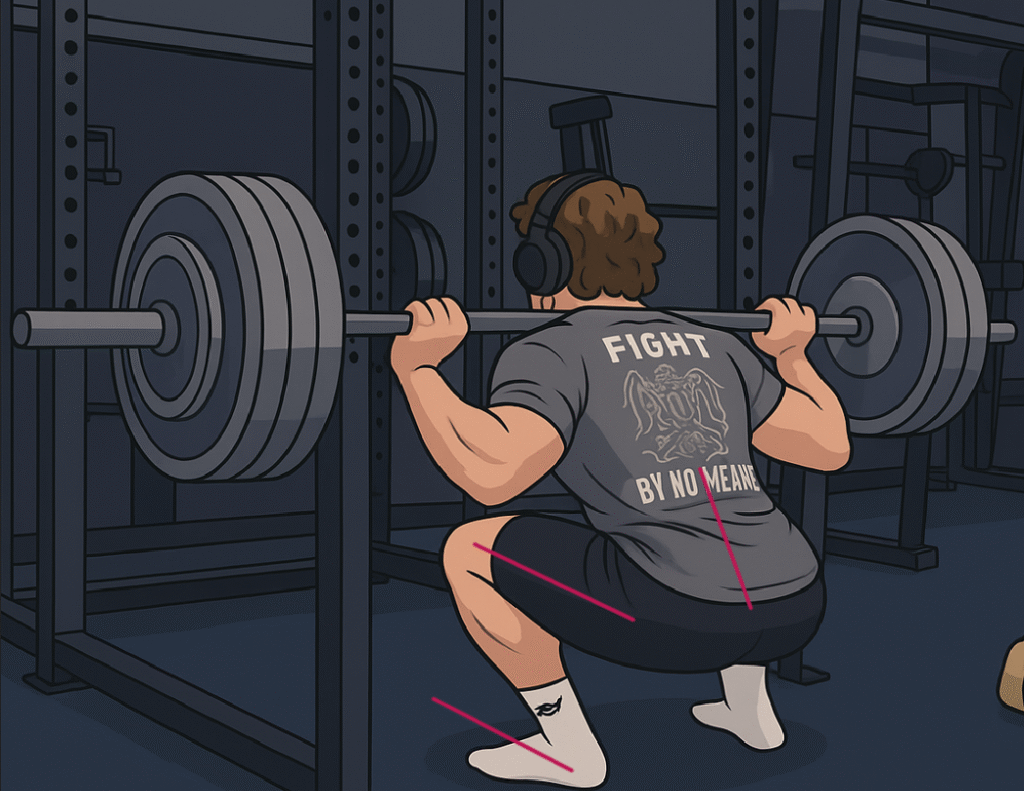
Figure 6: Squat until femur is horizontal to the ground
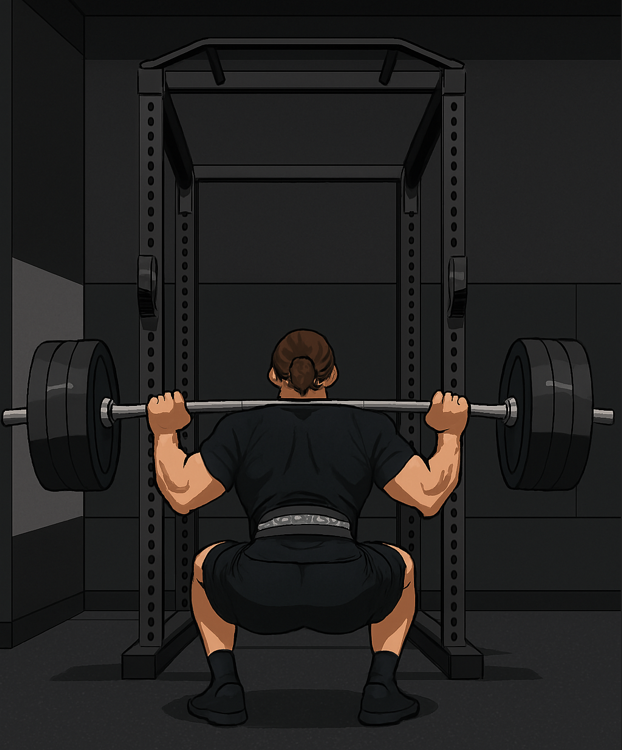
Figure 7: Posterior view
- 如果您無法蹲到股骨與地面水平且整個腳部著地,請回到進行準備/熱身,練習打開髖關節。
If you can’t squat until the femur horizontal to the ground and whole feet to the ground, go back to point 1 in preparation/warm up to practice on opening your hip joints.
- 然後站起來,雙腳用力撐地,並將槓鈴牢固地放在深蹲架上。放開槓鈴前,務必檢查槓鈴的兩側是否牢固地固定在深蹲架上。否則,可能會發生嚴重事故。
Then go back up by pushing your feet against the ground and put the bar securely on the squat rack. Be sure to check both sides of the bar are safely secured on the squat rack before you let go of the barbell. If not, serious incidents may occur.
3. 秘訣 | Bonus Tips
- 安全提示:如果您無法抬起槓鈴,請將其向後掉到安全桿上。
SAFETY TIP: Drop your bar backward onto the safety bar if you are unable to lift.
- 深蹲不只是上下。下蹲時,髖部向後擺動也很重要,也就是說,深蹲時臀部要向後。
Squat is not only up and down. When you go down, it is also important to hip hinge at the same time, i.e. your hips go back when you squat.
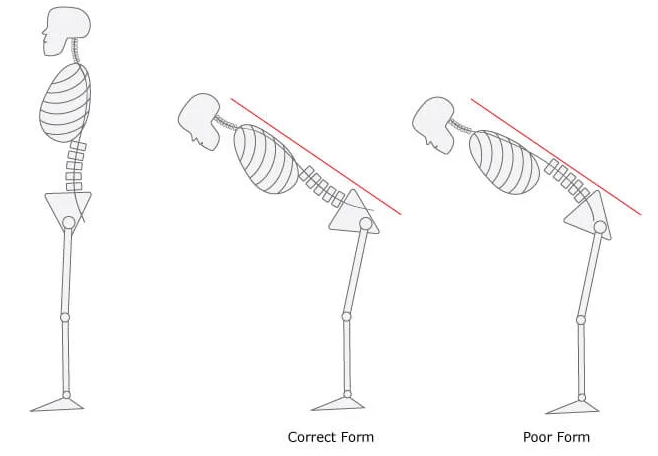
Figure 8: Hip hinge
- 更寬的腳站姿、膝蓋向外、雙腳向外以及髖關節鉸鏈可以幫助打開髖關節。
Wider foot stance, push out your knees, feet pointing outward and hip hinge can help open your hip joints.
- 只要你進行髖鉸鏈運動,膝蓋就可以超出腳尖。
Knee can go beyond the tips of your feet as long as you perform hip hinge.
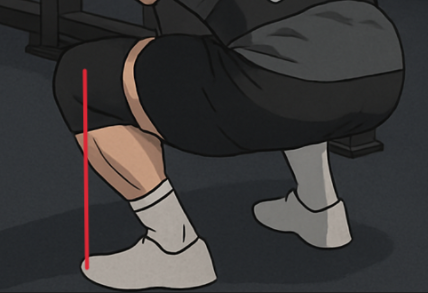
Figure 9: Knees versus feet position
- 練習腳踝背屈可以幫助你蹲得更深。
Practice ankle dorsiflexion can help you squat deeper.
- 避免「臀部眨眼」。更寬的腳站姿、膝蓋超過腳趾以及穿著深蹲鞋可能會有幫助。
Avoid butt wink. A wider foot stance, knee over toe and lifting shoes may help.
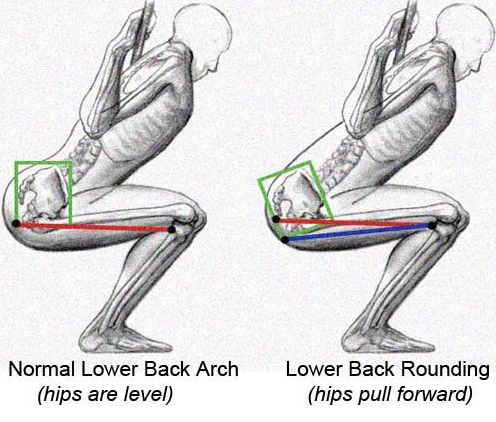
Figure 10: Butt wink
- 如果你的股骨較長,你的背部會向前傾斜以保持平衡。
If you have long femurs, your back will lean more forward to compensate the balance.
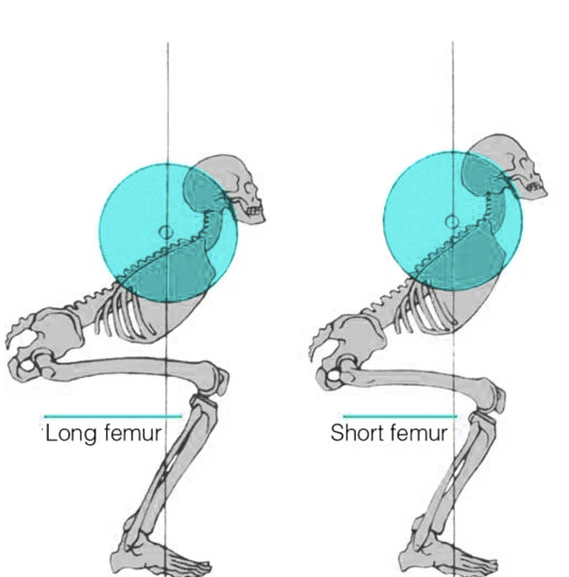
Figure 11: Long femur vs short femur
- 高槓是把槓鈴放在斜方肌上;低槓是把槓鈴放在肩胛骨或三角肌後部附近。高槓可以讓你更直立地舉起槓鈴,蹲得更深,而低槓可以讓你蹲得更重。高槓更著重於臀部肌肉(膝蓋承受的壓力較大),而低槓則更注重股四頭肌(背部承受的壓力較大)。高槓比起低槓也會令到膝蓋更超過腳趾。因此,膝蓋疼痛的人可以暫時換成低杠,背部疼痛的人也可以暫時換成高槓。但這完全取決於個人喜好。
High bar is putting the bar on your trapezius; low bar is putting the bar around your scapula or rear deltoid. A high bar can lift more upright and go deeper, while a low bar can make you squat heavier. High bar is more glute dominant (more stress on knee) but lower bar is more quadriceps dominant (more stress on back). High bar also allows knee to go over toe more than that of low bar. So people with knee pain may shift temporarily to low bar and people with back pain may shift temporarily to high bar. But it is a personal preference.
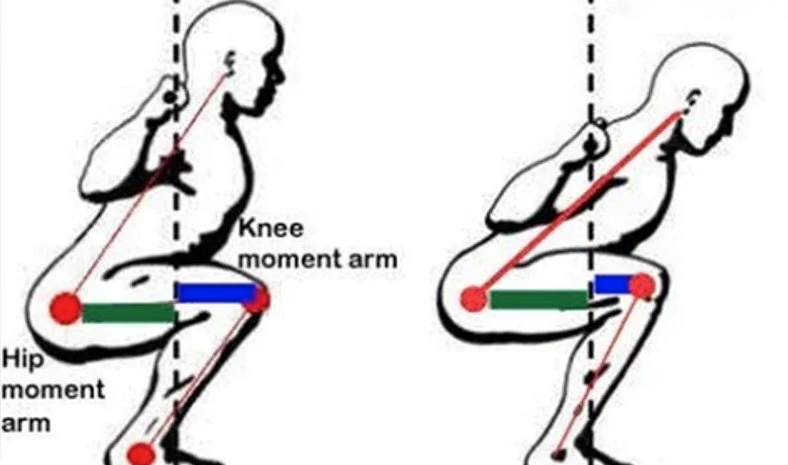
Figure 12: Left: High bar; Right: Low bar
4. 向大師學習 | Learn form Masters (YouTube)
本簡訊僅供參考,不能取代專業醫療顧問或合格專家的建議。如果您尚未訂閱,請訂閱簡訊和我的Instagram帳號,以免錯過任何更新。
您可以在以下平台分享內容給你的朋友們喔~
☕ 請我飲一杯咖啡 | Buy me a coffeeLast updated on March 2nd, 2026 at 10:21 pm